Gentle movement, lasting change: How yoga sparked new life in a nursing home
Imagine living in a place where most days blend into each other, with long stretches of idle time and few opportunities to move your body. For many residents in nursing homes, this is daily reality. But what happens when yoga is introduced - not just as exercise, but as a way to reconnect people with their bodies, their breath, and each other?
That’s exactly what unfolded in a 35-bed nursing home for veterans in Texas. Despite a variety of activities available, many residents spent hours inactive, leading to physical decline and a sense of boredom. Inspired by movement therapy and yoga for older adults, the care team decided to try something different: a gentle, adaptable yoga program designed to meet residents where they were, whether they could walk with assistance or used a wheelchair.
At first, the idea didn’t exactly catch fire. Residents were skeptical - some even avoided sessions, saying they were “too busy,” despite having plenty of free time. Staff, too, were hesitant, unsure how to fit the new program into their routines. But persistence paid off. The team practiced the exercises themselves, held meetings to explain the benefits, and tweaked the schedule to make participation easier for everyone.
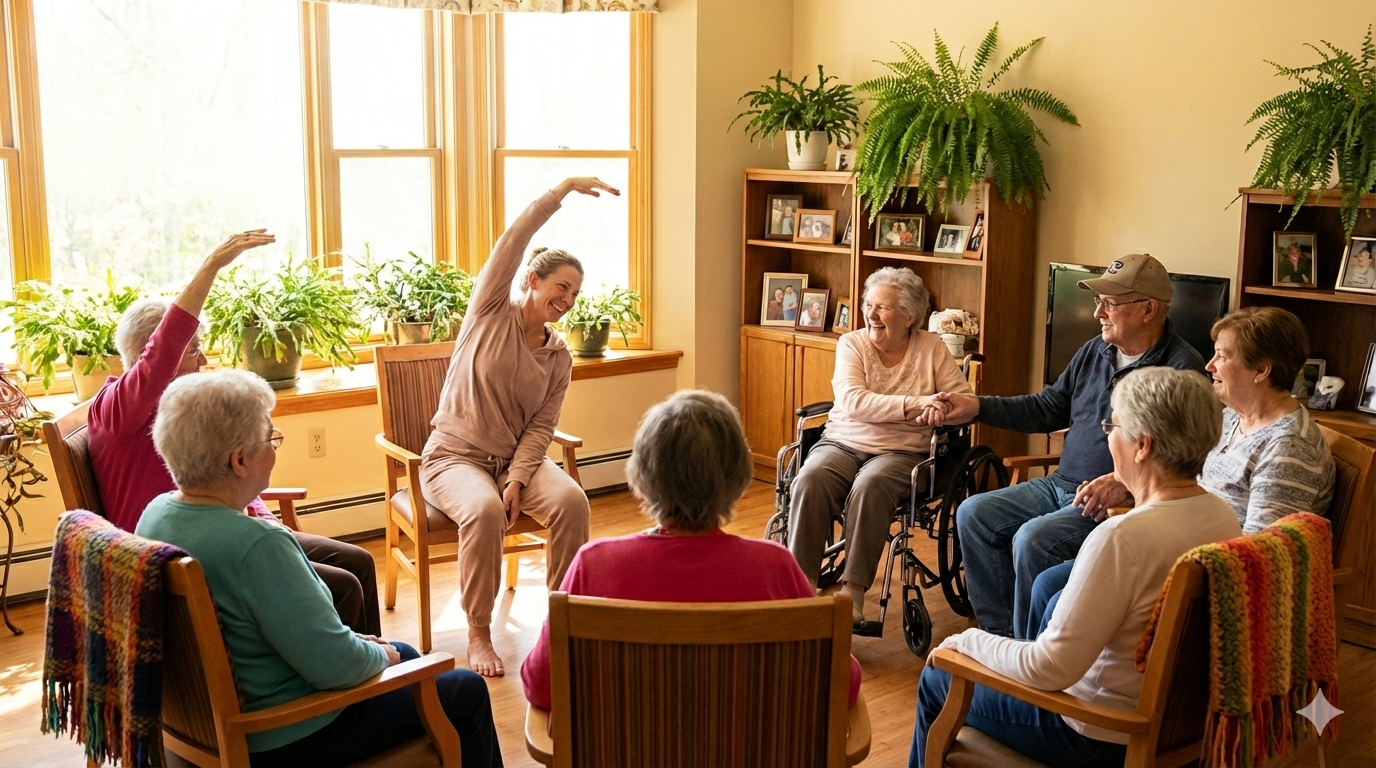
The yoga sessions included simple stretches, deep breathing, and movements that could be done sitting or standing. Over time, something remarkable happened. Residents who joined in started to notice changes: their joints became a little looser, their muscles a bit stronger, and their breathing deeper. For those living with arthritis or limited mobility, these gentle movements helped maintain or even improve their range of motion, making everyday tasks like buttoning a shirt or tying shoelaces a bit easier.
But the benefits went beyond the physical. Deep breathing and relaxation exercises helped ease anxiety and frustration - common feelings in a nursing home setting. The group sessions also became a social highlight, giving residents a chance to connect and share a laugh or a story. Even the staff felt the difference. Taking 20 minutes to stretch and breathe together became a welcome break from the stresses of caregiving, boosting morale and creating a sense of teamwork.
What makes this story so relatable for anyone interested in yoga is how universal these benefits are. Whether practiced in a studio, at home, or in a community setting, yoga isn’t just about flexibility or strength. It’s about creating space - for yourself and for others - to move, breathe, and be present. This nursing home’s journey shows that even in the most challenging environments, yoga can be a catalyst for positive change, sparking new energy, independence, and connection.
What’s especially exciting is the new understanding that emerged from this experience: yoga, when practiced in a group setting in elder care, becomes much more than a physical activity. It transforms into a powerful bridge for social connection among residents and a source of stress relief for staff. Group yoga sessions fostered unexpected social benefits - residents who were typically withdrawn began to look forward to these gatherings, sharing stories and laughter during and after exercises. This reveals yoga’s unique ability to break down social barriers in institutional settings, nurturing a sense of community and belonging.
Staff, too, experienced psychological and professional growth. Practicing yoga alongside residents didn’t just provide a physical break; it led to measurable improvements in morale, creativity, and teamwork. Staff reported feeling less stressed, more engaged, and more willing to participate in other wellness programs. This dual benefit - helping both caregivers and those they care for - shows how yoga can spark positive cultural change in care environments.
Perhaps most inspiring was the shift in dynamics as residents began to lead some of the yoga sessions themselves. This empowerment increased their self-esteem and encouraged greater participation, subtly transforming the traditional caregiver-patient relationship into one of mutual respect and collaboration.
For anyone passionate about yoga and wellness, these insights open up exciting possibilities. Yoga isn’t just a tool for individual wellness, but a communal practice that can transform even the most challenging environments. When thoughtfully adapted and introduced in group settings, yoga can spark social engagement, reduce staff stress, and empower residents - making it a holistic wellness practice that benefits entire communities, not just individuals.
So, if you’ve ever wondered whether a few gentle stretches and mindful breaths can really make a difference, the answer is a resounding yes. Yoga isn’t just for the young or the fit - it’s for everyone, at any stage of life. And sometimes, the simplest practices can bring the most profound transformation.
Tips for yoga practitioners:
Practice adaptable movements
Include standing and seated postures, adapting for limited mobility and wheelchair users so everyone can participate.
Prioritize deep breathing and relaxation
Make mindful, deep breaths a core part of sessions to boost lung capacity and reduce anxiety.
Foster community and shared leadership
Encourage interaction and participant-led segments to build support, confidence, and connection.
Inspired by the research of V. Hamilton-Word & colleagues, Geriatric nursing (New York, N.Y.), 1982
doi: 10.1016/s0197-4572(82)80059-1
